Read the Conversation
Conversation highlights:
- A return to roots: With over 25 years in healthcare and a background running his own home healthcare company in Tunisia, Mourad joined VitalAire Arabia to anchor Saudi Arabia’s home care transformation, bringing Air Liquide’s 30+ years of global expertise to one of the region’s fastest-evolving markets.
- Growing footprint: VitalAire Arabia has expanded from a single Riyadh branch to three major cities, Riyadh, Jeddah, and Dammam, with 65 employees, a three-department service model spanning respiratory care, diabetes management, and operations.
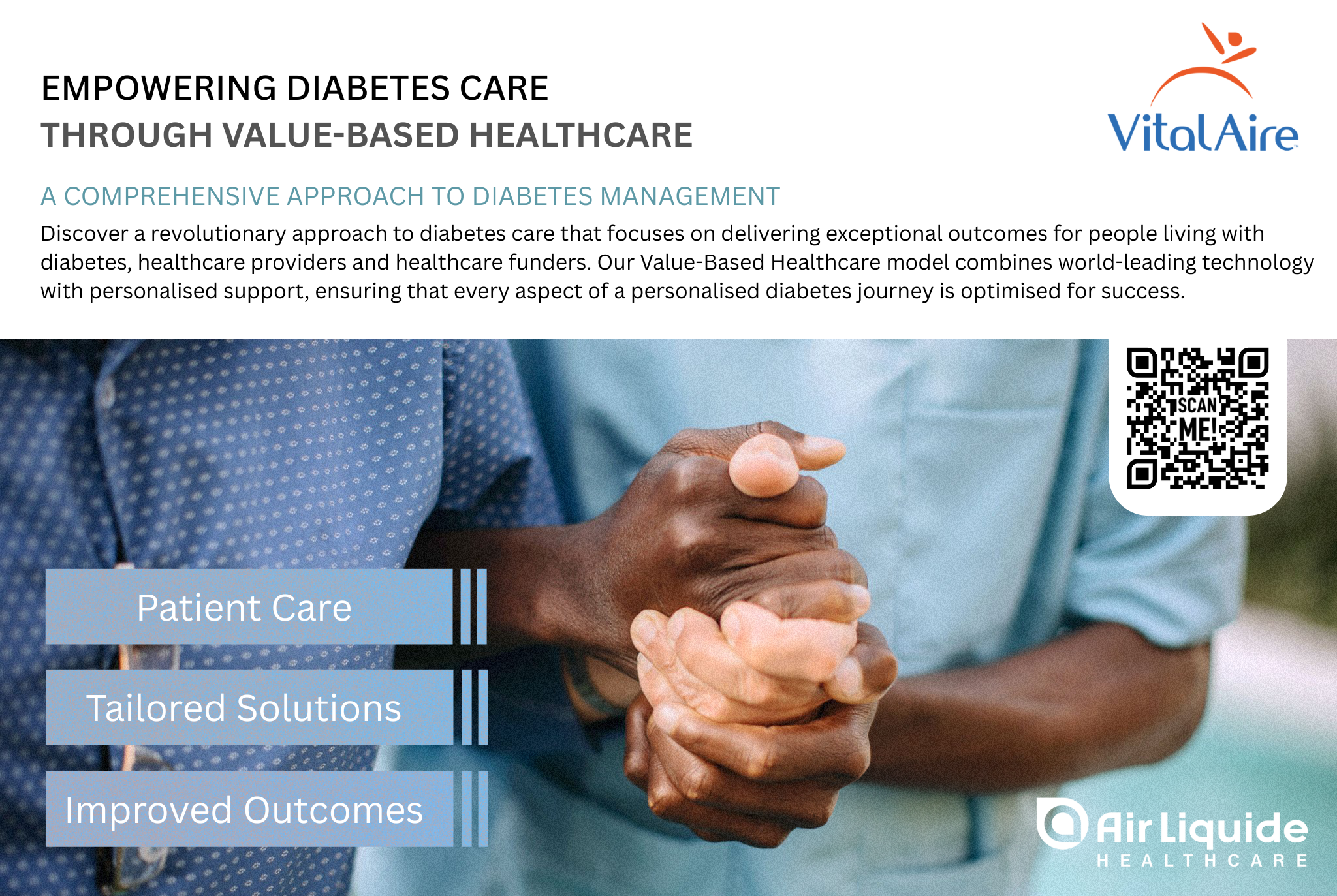
- Beyond the machine: VitalAire’s value-based care model, built around initiation, coaching, individual care plans, and continuous follow-up, treats the machine as the entry point and the service as the treatment, through what the company calls Device Use Optimisation (DUO).
- Reshaping reimbursement: Mourad is in active discussions with Saudi authorities to introduce bundled service procurement codes, proposing a proof-of-concept pilot for patients living with Diabetes that would demonstrate clinical and financial outcomes before formal tendering, a model that could extend care to over a 100% more patients for the same public expenditure.
- Human-centred leadership: In a rapidly digitising sector, Mourad believes the defining leadership traits remain empathy and ownership, complemented by the agility to adapt when technology, regulation, or market conditions demand it.
EF: What attracted you to this role, and what mission did you set for yourself?
MC: My mission here is to share over 25 years of experience across different departments. It is also going back to my roots. I had my own company 20 years ago in my home country, Tunisia, in home healthcare. The group asked me to come to Saudi Arabia to improve the chronic patients’ quality of life and to be part of the transformation of model care in the Kingdom, which aligns with Vision 2030.
This is my objective. By 2030, we want to strengthen our position in the Saudi home healthcare market. We want to transfer the know-how and knowledge of VitalAire, with more than 40 years of experience in more than 30 countries. We are aiming to improve the quality of services and thus the quality of life in the Kingdom, in line with Vision 2030.
EF: What is the strategic significance of Saudi Arabia to the group?
MC: As an international company, we invest in SaudiArabia because of market needs, i.e., patient needs. One key reason is diabetes. Saudi Arabia has one of the highest prevalence rates of diabetes in the world, and we are keen to provide quality service for these patients and improve their quality of life.
At the same time, there is also obstructive sleep apnea. People have sleep issues, and we provide treatment for them. Many people use these devices for a few hours during the night, but this duration of use does not provide the best treatment. So, the population is large, and the prevalence is very important. This attracted our company to invest eight years ago. Through an acquisition, we acquired a company that was only a distributor of respiratory equipment. We started the respiratory activity, and in 2021, we expanded our activities in the field of diabetes by introducing the hybrid closed loop, a new treatment option for patients with diabetes.
EF: Could you tell us about your footprint and portfolio?
MC: Our company evolved from one main branch in Riyadh. Today, we are in three major cities in the Kingdom. We have Riyadh, our main location. Then we have Jeddah, where I am right now visiting our colleagues. We also have another branch in Dammam.
As of today, we have 65 employees. We started many years ago with a very small number of employees.
Our organization mirrors the current distribution market with three departments: Diabetes, Respiratory, and After Sales Operation, which includes a unique Patient Care section:
- The first department is diabetes. We treat people with diabetes and deliver full-service care. Instead of just a pump, we provide what we call a Hybrid Closed Loop, which includes a pump plus CGM (continuous glucose monitoring), and we handle installation and monitoring.
- The second department is commercial, mainly respiratory. In respiratory, we work with obstructive sleep apnea. We also provide ventilation equipment and oxygen therapy, such as oxygen concentrators, for people with COPD and other respiratory conditions.
- The third important department is Operations. This is the After Sales, and it’s divided into two areas:
- One is equipment operations. We sell machines to patients and hospitals, and the team manages maintenance and active service for the equipment.
- The other part is customer support and patient follow-up. We have nurses and paramedical staff who support patients, accompany them in their journey, and assist with their treatment.
EF: How can we achieve a system that truly rewards clinical outcomes, and what role are you playing in shaping that?
MC: This is what we are actively discussing with the state and authorities, who today are playing a major role in transforming care and treatment for patients.
For us, value-based health care is more than a concept. For me, it is the DNA. The equipment itself is not enough. The Air Liquide group has supported more than 2.3 million chronic patients worldwide, and in Saudi Arabia, between diabetes and respiratory, we look after almost 10,000 patients. A person living with a machine needs much more than the device.
Before even getting the machine, there is a first phase. When the patient is diagnosed and requires a machine, initiation is needed. They must understand the pathology and how they will live with the machine. They have to be prepared. Then we install it and show how to use it.
After that, we initiate what we call a Personalized Care Plan to accompany the patient, because every patient is different. The machine parameters can be adapted, but the proper care plan is essential. It includes coaching, initiation, and follow-up. Depending on adherence, we adjust the number of touchpoints. The goal is to make sure the patient uses the treatment properly and enhances the outcomes of the treatment.
Giving the best machine alone does not improve the quality of life. Even if the machine parameters are correct, the patient still needs someone to explain, advise, and support them. This is our role, and it is very unique for VitalAire. We are here to provide a service, not only distribution. In Saudi Arabia, the market has often been based on purchasing equipment, but we focus on initiation, installation, and a full personalized care plan.
Recently, at the Global Health event at the end of October, we signed an MOU with the authorities to run a pilot in respiratory care, especially for patients living with sleep apnea who need to sleep with a machine. It is not easy for patients. I have attended many sessions with patients, and they ask if they are going to the moon when they first see the machine.
It is very important that someone explain, reassure, and monitor them. We check adherence, how many hours they use the device, and adapt if needed. Once patients understand and use the machine properly, they get the full benefit of treatment. In sleep disorders, proper sleep changes their life. This is our role. The machine is just part of the treatment.
We have to sit with the patient and help them get the proper treatment so they sleep better. It is the same for patients living with diabetes. People who used to take injections need to understand how to calculate carbohydrate intake and manage their condition. They often feel frustrated, asking what they can eat, if they can fast, and what choices are allowed.
It is very important that, when they have the machine, they also have someone to explain how to use it, calculate carbohydrates, and manage daily life. With that support, people live better, have a better quality of life, and continue their normal activities. Otherwise, they have the machine but do not know what to do, and remain worried. This is our role.
Today in Saudi Arabia, this is a key discussion. It is about transforming the model of care. The government purchases many machines and gives them to patients, but if patients do not know how to use them, the machines are quickly put away, stored, or even resold. This is a loss for the government, and more importantly, the patient does not receive the treatment for which the machine was prescribed.
If the patient does not receive the proper treatment, there can be negative effects on the body. The condition can worsen, and the patient may end up in the ICU, needing more severe and costly treatment. The machine was prescribed to prevent comorbidities and complications. If the adherence to treatment is insufficient, complications will happen, and the government will spend even more money.
That is why our discussions with the authorities focus on changing the model. Instead of providing only the machine, we propose a bundle: machine plus service, in order to improve adherence to treatment. This bundle would be prescribed to the patient. If the patient does not adhere, we take the machine back, reinitialize it, and give it to someone else who will benefit. For the authorities, this is a better management of expenses.
We call this Device Use Optimization (DUO). The doctor prescribes the machine. If the patient does not use it, we recover the device and allocate it to another patient. Today, if the government or the insurance purchases a machine and the patient does not use it, the cost is lost. But if the government pays for care services and thus for outcomes, meaning the machine plus the adherence to treatment and proper follow-up, then patients receive real benefits. If one patient does not adhere, another patient can. This is a wiser use of resources.
It is about providing a package that includes service and continuous improvement of outcomes. If there are upgrades or better machines, they are integrated into the package. As long as the patient is using the device and improving their adherence to treatment, the government pays and invests in their health. At the same time, we improve the quality of life.
It is a challenge because it requires a new reimbursement model. Today, reimbursement is mainly through tenders focused on the machine itself, with some basic care. We already provide initiation and follow-up, but these services are not recognized and are not part of the specifications.
EF: How do you see the Saudi public sector, especially under Vision 2030, working with the private sector to rethink how care is delivered?
MC: I would say this transformation is very important. Moving from the Ministry of Health to the Health Holding Company, which now manages the model of care, and having NUPCO as the unified procurement body, is the right direction. It creates proper management instead of fragmented purchasing and different models.
At the same time, we understand that transforming a system takes time. There are ongoing discussions with us, and we are working together to introduce service billing. The main question today is who will take the lead. Will it be the Ministry of Health or Health Holding? Who starts the change? That is part of the discussion.
We are bringing a new model for them. They ask why they should move forward with us. Our answer is clear. There are thousands of patients who can benefit. So we are proposing a project as a proof of concept. We work together, we measure the outcomes, and from there we move to a proper tender.
Through the project, we will better understand the system, define the specifications, and then NUPCO will launch the tender properly. We are advancing step by step. The billing code is still not there, but we hope to see progress within the next few months.
I am positive that by 2027, we will have a bundled service model in place. We are also looking to expand into other specialities. I feel that the authorities understand this direction. It is a way to improve efficiency in how public money is spent.
We have conducted pilots with Saudi hospitals on diabetes, showing that, with the same budget, we could treat 250,000 patients with a hybrid closed-loop bundle instead of 100,000 to use the devices only. That is a significant difference for the same amount of money. At the same time, patients receive better treatment with meaningful care services. And if someone needs help using the device properly, we can intervene early before complications occur.
Another important point is follow-up and reporting. With our model, we provide dashboards and structured reports with important insights related to the patient’s health status: evolution of the parameters, behaviour, adherence, and some technical recommendations for any device setting needed. The health clusters and authorities can see the data. We are also moving toward digitalization and artificial intelligence. With monitoring tools, we can identify early warning signs and predict when something is not going well.
When we closely accompany patients, we can prevent complications. If complications are not prevented, patients may end up in the ICU, which is far more complex and costly. The device's original prescription was meant to avoid exactly that. These care plans will come with reporting, monitoring, and measurable outcomes. With proper monitoring, we can prevent complications, reduce costs, and, more importantly, preserve lives.
EF: What kind of people do you need at VitalAire in this digital world?
MC: We need both talented personnel and Digital Technology. Indeed, AI is a huge transformation for humanity, and it will continue to shape the world we are living in. But at the end of the day, we are delivering services to patients. We are treating humans thanks to human interventions. That will not change.
AI will support us, but it cannot replace human care. What we need are people who have empathy. Empathy is essential in our business. We work with patients (and families) who are living with chronic conditions, so understanding, listening, and supporting them is critical.
Our people show ownership; if you do not take ownership, you cannot succeed. You must feel responsible for what you are doing. I was saying this morning to the team, if there are no problems, it probably means there is no business. Nothing is perfect. The world is changing every day, and we face new challenges constantly.
The only constant is change. Everything is always evolving. And today, change is even faster. What works today may not work tomorrow. You have to be agile and adapt yourself all the time. It is very important to have this mindset. For leadership in AI, you need critical thinking and strong analytical skills. You must be able to look at situations clearly and understand what is happening. But at the same time, you have to keep adapting. Adaptability is the prerequisite for continued success.
EF: Do you have a final message?
MC: My only message is that hopefully we will meet again with results, to materialize this challenge, and to show that we have improved the way we deliver care services in Saudi Arabia as part of the Kingdom's transformation of the model of care. It is not only about having the machine, but about providing a meaningful care service that focuses on patients’ outcomes improvement, on top of cutting-edge technology devices. That is how we can build a truly valuable healthcare system in Saudi Arabia for diabetes and respiratory diseases, and hopefully for other pathologies as well.